
Food & Drink
Discover how we create stand-out food and drink experiences to delight guests and boost performance.

From trend to strategic transformation.
April 14, 2026

The future of hospitality is being shaped around the dining table.
Food and beverage has long been a cornerstone of the guest experience; today, it is being redefined by shifting attitudes as health and wellness become fundamental expectations.
For hotel groups, the opportunity is clear: move beyond menu upgrades to strategically integrate wellness across F&B, spanning guest well-being, operational resilience, and talent development.
Wellness has moved into the mainstream – nowhere more visibly than at the dining table. Healthiness has overtaken affordability as the top eating-related value across generations; globally, “health and wellness foods” – already a near trillion-dollar category – is projected to grow strongly through 2030.
As what was once a specialized offering becomes a baseline expectation, hospitality’s opportunity is to shift “the healthy choice” from side plate to main course, replacing the old sense of sacrifice and restraint with one of taste, discovery, and pleasure. For innovative players, the table is laid for a full transformation: making healthy eating a widespread option, leveraging sustainable sourcing to build business resilience, and building a talent platform on the creative wellness kitchen.
Especially for Millennials and Gen Z, wellness is a personalized daily practice strongly tied to nutrition, and one they expect to maintain when away from home. As once-niche dietary requirements – flexitarian, plant-based, gluten-free, gut-friendly, low- and no-alcohol – enter the mainstream, the emphasis has shifted away from restriction and sacrifice towards pleasure and positivity.
We are witnessing a strong evolution in food & beverage consumption worldwide, as people become more and more aware of their feeding patterns' impact on their health. To support our owners to embrace this growing and long term trend, our aim is to offer a more inclusive, delicious and healthy F&B offer in every hotel, at every mealtime, by developing No- & Low-alcohol options in our hotels bars and putting more plants at the center of our plates to reduce animal protein.

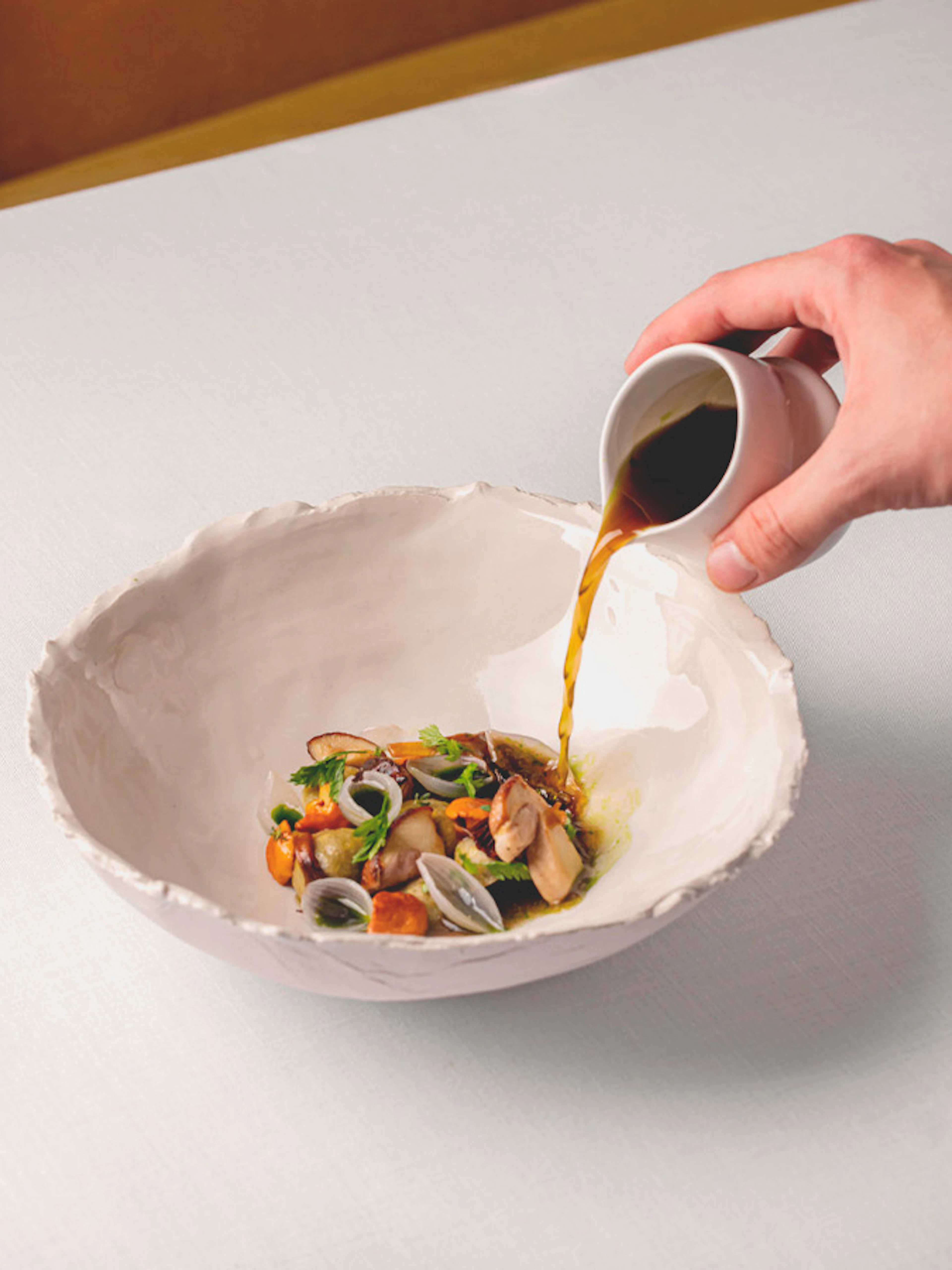
The Flexitarian Revolution
The new wellness dining rejects restriction and moralizing, showcasing plants as the default base with a balanced composition including fiber, protein and good fats. As 30% of consumers say they would switch restaurant brands to find plant-based alternatives to meat, innovative hospitality brands are aligning with flexitarian eating habits.
To remain attractive, hospitality brands are focusing on pleasure‑first dining at scale, designing menus where the healthiest choices are also the most appealing.
It’s a strategic shift that strengthens revenue resilience by enabling premiumization, for example through higher-quality sourcing, innovative functional beverages, and signature plant-forward dishes. And with sustainable sourcing as a wellness feature – as “good for me” increasingly encompasses “and good for the planet, too,” – it builds brand trust through clear standards and measurable commitments.
Guests spanning brands in all segments can already feel – and taste – this experience shift.
At the luxury end of the portfolio, wellness dining is being reimagined as a refined, experience‑led proposition. At Raffles London at The OWO, Pillar Kitchen offers a nutrition‑led menu curated with movement and nutrition experts, demonstrating how wellness can be elevated into a high‑end dining experience that combines performance, pleasure and personalization.
Wellness Dining at Novotel
At Novotel, the revolution is underway as the Longevity Everyday strategy transforms the brand’s culinary approach with a focus on flavor and sustainability. By the end of 2026, guests will see at least 25% plant-forward options across all hotels - 50% of hotels have already achieved this target.
Eating well should bring joy, not pressure. At Novotel, we make healthier choices delicious, generous and exciting. Our plant-forward approach is not about restriction - it’s about giving guests food that tastes incredible and makes them feel good.

Kitchen teams are receiving world-class training from the Culinary Institute of America to create delicious, healthier, sustainable choices and a multi-year collaboration with plant-forward cook and food influencer Alfie Steiner is bringing new recipes to Novotel menus and inspiring guests with plant-forward dishes they can recreate at home. Along with its pioneering ocean commitment with WWF to strengthen seafood sustainability, Novotel is at the forefront of the wellness dining trend.
Our aim is to be bold, to move forward and avoid obsolescence, and crucially, to move away from any moralizing discourse around healthy eating. We studied diets and realized the strong trend towards flexitarianism, opening significant potential around CSR challenges like 'eating better' through quality and better sourcing.


At Novotel Cairns, for example, the plant‑forward menu grew progressively, shaped by climate, local produce and guest behavior. Fresh fruit and vegetables were always a central part of the menu, and the team introduced daily specials and more plant‑based dishes to attract local guests.
According to Damon Georgiou, Culinary Director at Novotel Cairns Oasis Resort, plant‑forward dishes are treated with the same standards as the rest of the menu, without being positioned as restrictive options. Many guests still want the same sense of indulgence as classic comfort dishes like burgers, pizzas or “fish and chips”, and the variety and familiarity of these alternatives have driven strong guest adoption and repeat visits.
While responsible sourcing meets rising guest expectations for transparency, it also builds a more resilient supply chain. Commodity volatility and ecosystem degradation are driving availability constraints, quality swings and price shocks – see for example the doubling of cocoa and coffee prices in 2024 alone (up 163% and 103% respectively) due to extreme weather.
In this context, hotels that redesign menus around a plant-forward balance, combined with more resilient sourcing choices, are better positioned to secure supply, stabilize costs, and protect brand trust.
Pressures on natural resources due to food consumption are tangible and escalating… Innovation, traceability and responsibility find their rightful place in the Group’s reflections on reinventing food habits and the guest experience in hotels in restaurants.
Early signs indicate that – as well as future-proofing business against supply shocks – wellness F&B strategies such as plant-forward menus also deliver tangible financial benefits by optimizing food costs without impacting topline revenue, and bring significant improvements in operational efficiency.
Within Accor, food & beverage represents:
17%
Group carbon footprint
50%
Group water impact
80%
Group land footprint
Building a Resilient Supply Chain for Accor
Accor’s Good Food Policy is a bold, holistic vision designed to reduce operational cost, support local economies, and promote guest well-being.
This vision is translated into strong, time‑bound commitments by 2030, such as increasing the share of plant‑forward dishes on menus, serving only responsibly sourced coffee, and banning endangered seafood species. These commitments exemplify the operational translation of wellness‑focused F&B at scale.
The evolution of dining habits towards healthier options both for consumers and for the planet clearly demonstrates that sustainability is not a standalone initiative, but an integral part of a robust business strategy. By embedding ambitious commitments such as increasing plant-forward dishes and ensuring responsible sourcing across our F&B, we are not only meeting guest rising expectations, but also future proofing our menus against global challenges, securing supply, and optimizing costs.


This global strategy is brought to life by each brand. Mercure reflects its locally rooted positioning by placing 20 regional products in the spotlight, supporting local communities and connecting guests to what truly defines each destination.
Pullman demonstrates that high sustainability standards in food & beverage can drive both operational consistency and meaningful brand differentiation.
In 2026, five Pullman restaurants across Peru and Chile made history as the first hotel‑based restaurants worldwide to be included in the We’re Smart® World Green Guide. This achievement followed a structured regional program encompassing chef training, rigorous external audits, waste reduction initiatives, and a commitment to local and seasonal sourcing.
This shift is not a simple menu tweak, but a capability shift – and capability is owned by people. Forward-thinking hospitality players that anchor F&B in clear values (healthier living, responsible sourcing, lower impact) and give teams a creative playground for menu innovation will be better positioned to attract, secure, and develop culinary talent.
Wellness-centered F&B is a talent strategy as much as a guest strategy: a mission-led craft platform that builds belonging, pride, progression, and performance.

Wellness Dining as Meaning, Craft and Community
In a talent market where meaning is a must-have – 89% of Gen Zs and 92% of Millennials say a sense of purpose is important to their job satisfaction and well-being – employers are under pressure to offer purpose-backed programs and skills growth. At the same time, plant-forward cooking is emerging as a status craft and a cultural movement, emphasizing technique and storytelling, supported by chef networks and communities.
Helping our chefs start thinking plant-first is more than just a menu shift – it's a cultural transformation. It opens up a new mindset, and one our teams are genuinely excited to explore, learn, and make their own. For Novotel, we've partnered with the Culinary Institute of America to train our chef community on how to create these types of dishes. This isn't just about recipes; it’s about enabling them to produce plates where about 10% or less of the total dish is for animal protein, following the big lines of the Plant Forward movement. It represents a real investment in our people, fostering engagement and a sense of shared purpose.
For chefs on the ground, this shift is also deeply human. Beyond sourcing and menus, it is about transmission, inclusion, and growth. As Habib Benkhelifat, Chef at Novotel Nice Arenas, explains: “Sustainability is not only about products, but also about people — training, supporting and helping teams grow, and passing on responsible know-how.” In that sense, kitchens become not just places of execution, but places of progression.
Brands have the opportunity to scale plant-forward dining as a lifestyle with taste and creativity at its heart. As a visible mission with a skills development path, it can act as a lever for talent attraction and retention, enhancing attractiveness for chefs, F&B leaders, and younger talents seeking purpose and growth.

People-Led Wellness F&B at Accor
From local initiatives to brand-led talent strategies, Accor is leveraging wellness as a mobilization model and engine for meaning – a platform to shape the next generation of culinary talent.
At Fairmont Banff Springs, plant-forward cooking has become a platform for creativity and progression, with culinary challenges encouraging chefs to experiment, rethink ingredients, and develop original dishes under specific constraints. These initiatives not only push technical skills further but also foster ownership, mentorship, and collaboration within teams.
This approach is not a onetime shift but an ongoing evolution in how our kitchens think about ingredients, creativity and the role food plays within the broader dining experience.

More broadly, Fairmont hotels are investing in structured mentoring and development programs to help chefs grow beyond technical expertise, building leadership skills and a deeper understanding of sustainability and sourcing.
Meanwhile, on the Chinese island of Hainan, chefs from four Sofitel hotels joined creative forces in 2025 to launch 88 Bites, a year-long celebration of sustainable local cuisine. It’s a compelling demonstration of how wellness “constraints” can unleash creativity to create authentic, inspiring guest experiences while mobilizing cross-hotel teams around a common purpose.
The table has been reset. Wellness is now fundamental to hospitality. Hotel groups that build it into their operations – from menu design to sourcing models to culinary culture – will define the next era of hospitality.
These are some of the ways hotels can turn the opportunities into reality.


Discover how we create stand-out food and drink experiences to delight guests and boost performance.
Explore our insights into the trends and topics shaping the future of hospitality.

We are transforming hospitality’s food culture, reducing waste, and shifting habits – discover how.
